
OZC Drone Program – Flying High
Q&A with Dillon Harr Lead Drone Technologist at Optical Zonu
What is the single biggest problem you are solving for drone operators that regular radio signals can’t handle?
The biggest challenge we’re solving is maintaining reliable, high-fidelity connectivity for drones operating in challenging environments where radio frequency (RF) often suffers. Regular radio signals often degrade over distance or can easily fall victim to interference, which limits range and mission effectiveness. Our RF-over-fiber (RFoF) technology preserves high quality, low-latency RF performance over long distances, giving U.S.-manufactured drones have the same or better operational reach and signal integrity as foreign systems which presently are more advanced. We’re ultimately helping drone operators extend range and reliability without compromising security or control.
The Fiber Controlled Drone Link uses a physical fiber cable. Isn’t the cable a big limitation? When is the benefit of the cable worth it?
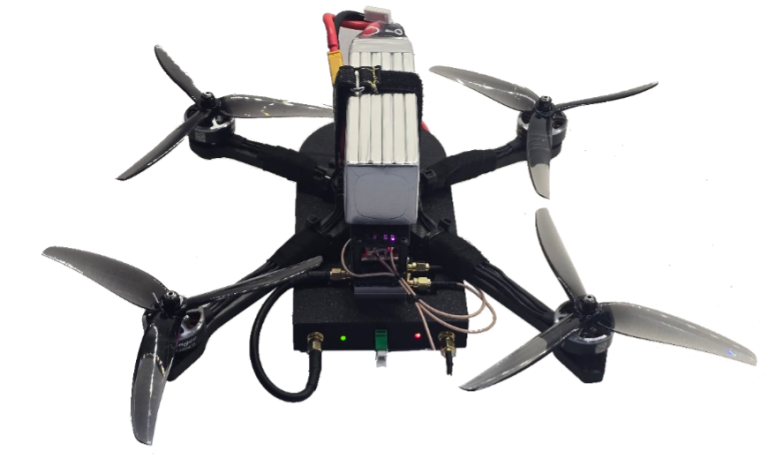
While a fiber cable is a limitation in many drone use cases, it provides major advantages when wireless communication is unreliable or unsafe– the location of the operator is exposed to RF sensing location detectors, as witness in the Ukraine. The Fiber Controlled Drone Link delivers secure, jam-resistant, low-latency control that’s perfect for operating in hazardous areas, tunnels, or combat zones where operators must either stay protected or it is simply impossible for them to enter. Because fiber can’t be intercepted or jammed, it’s invaluable for military missions in confined or high-interference spaces. This is also why the technology is useful for single mission loitering munition drones using fiber spools, which only must make a one-way trip to drop a payload and operators want to make sure it cannot be manipulated by adversaries. In all these scenarios, sometimes called “suicide drones” the benefits of a tethered link far outweigh the limits of physical cabling.
The Drone Extender can reach 20 km. How does your technology make a Wi-Fi signal work reliably at such a long distance?
The Drone Extender works by transferring the control and video signals over fiber long before it’s transmitted through open air, effectively bypassing the distance and interference problems of standard Wi-Fi. The system uses a Optical Controller Unit (OCU), which is positioned next to the person controlling the drone, and an Optical Drone Unit (ODU) connected via fiber, so the operator can be safely positioned miles away while the ODU near the drone handles the wireless link. This setup makes the system perform as if the operator were standing next to the drone, maintaining stable, high-quality communication up to that 20 km. This is helpful in a warfare setting because if an adversary tracks the signal and attacks, the strike will hit the ODU and not the controller who is safely at a distance. In commercial settings it creates much needed range for sprawling utility inspections.
Why is a fiber optic link more secure and resistant to interference than a standard wireless connection for drones?
Fiber-optic connections are inherently secure because they carry signals as light through a cable rather than broadcasting them through the air. That means there’s no RF emission to detect, intercept, or jam. Fiber also maintains signal integrity over long distances and isn’t affected by environmental interference, multipath fading, or deliberate electronic attacks. Because of this, drone operations using RFoF links are far more secure and reliable than those relying solely on wireless connections.
Who needs this technology the most right now? Is it the military, police, or inspection companies?
The military is the primary user because of its need for secure, interference-free drone control in contested environments. However, we’re also seeing strong demand from commercial sectors such as utilities and infrastructure inspection, where reliable long-range or confined-space operations are critical. Both defense and industrial users benefit from the same core advantage, which is dependable connectivity over longer distances when traditional wireless simply isn’t good enough.
Do these new products work with any drone on the market, or do they require special drones?
Our solutions are designed to work with virtually any drone on the market. Our RF to fiber parts are the lightest possible and are negligible contribution to the total payload. No special hardware or proprietary interface is needed because we’re enhancing the connection pathway rather than changing the drone’s internal systems. That compatibility makes it easy for operators to upgrade their existing fleets with secure, extended-range RFoF connectivity.
What’s the next big feature you want to add to this technology? Is it more range, less weight, or something else?
Our focus is always on increasing transmit power and extending effective range even further, while continuing to reduce weight and improve performance. The current systems are already lightweight and ruggedized, but we’re constantly working to expand their capabilities so operators can go farther, stay safer, and maintain absolute control in any environment.