

OZC Solution:
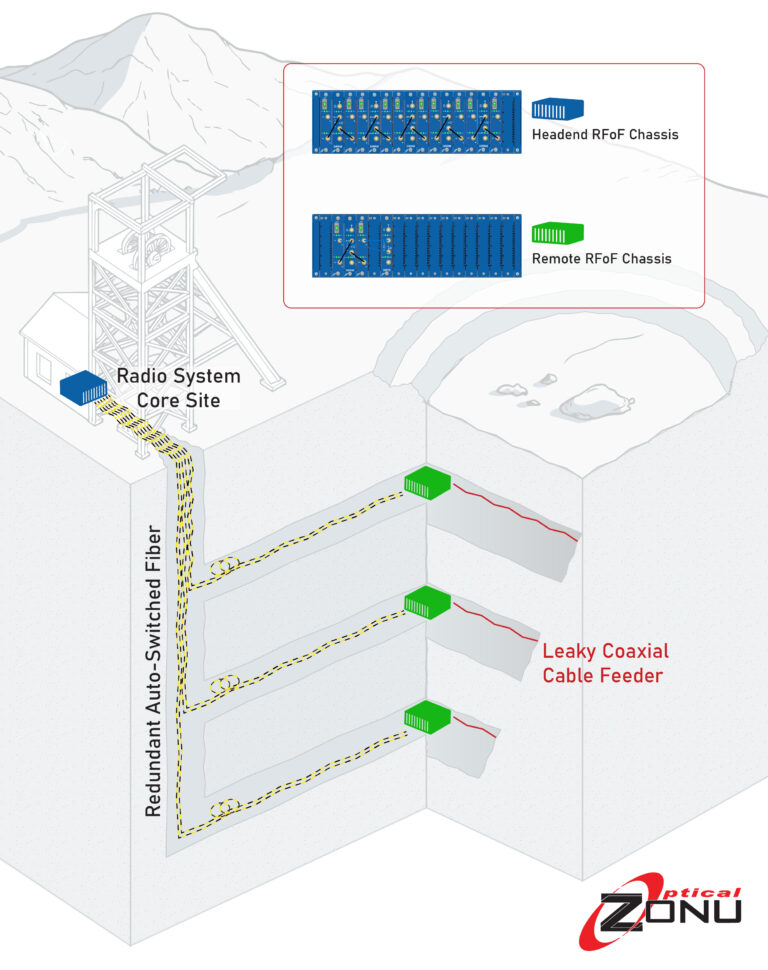
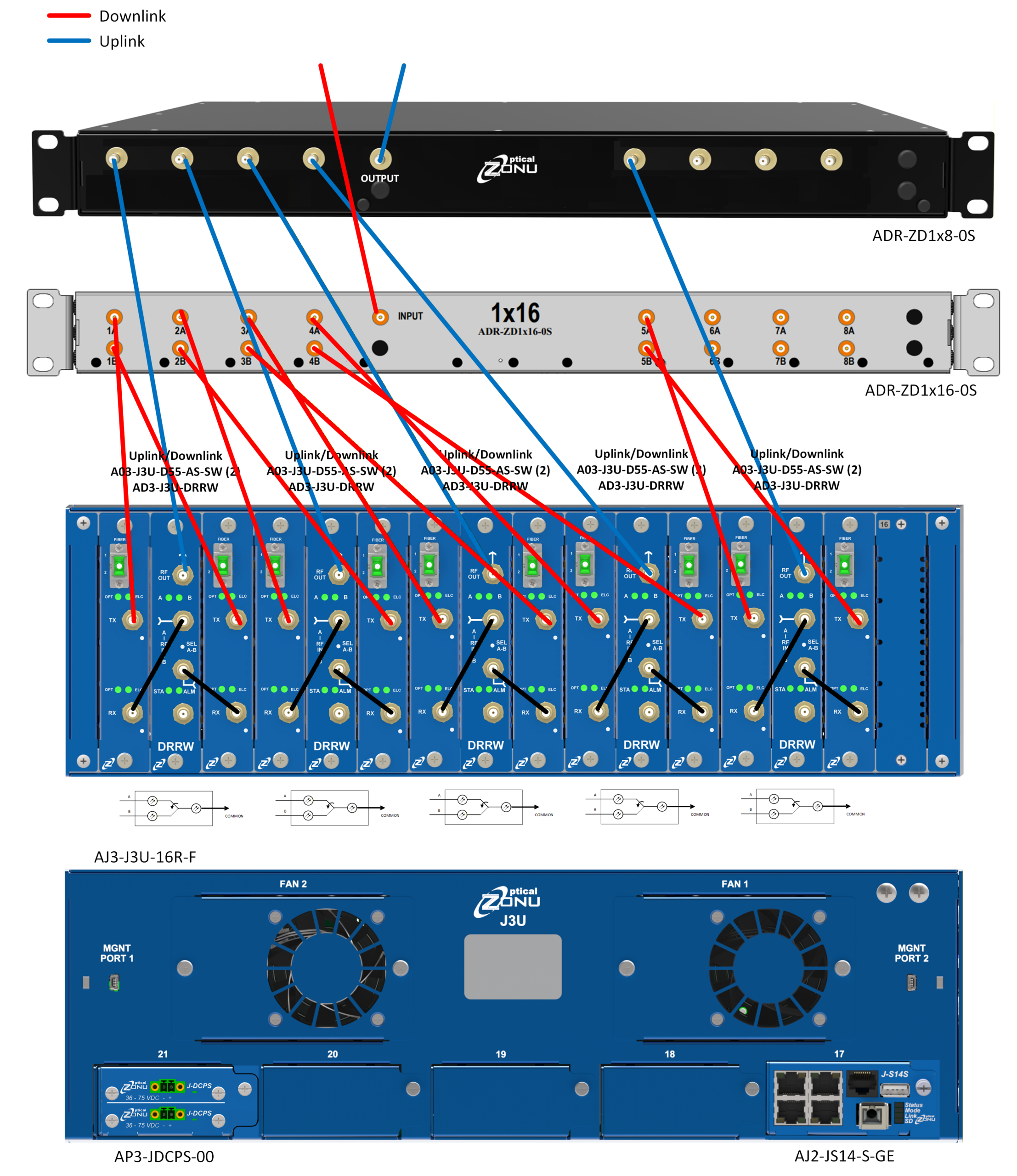
The Optical Zonu J3U chassis and plug-in modules were selected and deployed to meet the program requirements. 16-way RF splitters and 8-way RF combiners were used to split the headend radio signal to 8 RF over fiber links. Two fiber transceivers (transmitter + receiver) at the headend are used to transport redundant bi-directional radio traffic on two redundant fibers. A J3U RF redundancy switch selects between the two fiber paths based upon received signal strength.
Likewise, at remote locations, two fiber transceivers interface to the redundant fibers, Again an RF sensing switch is used to select between the two fiber paths.
An optional Ethernet over fiber datalink may be used to connect headend to remote locations. The Ethernet datalink contains a patented micro-OTDR. If there is a loss of Ethernet signal, the datalink switches to a pulsed OTDR that reports estimated fiber fault distances via the remote user interface.
For remote monitoring the JS14 managed Ethernet switch within the various chassis provides status and control using SNMP v2/v3 via an SSH command line interface(CLI), a tabular Web UI, the Managed RFoF graphical user interface (GUI). The management interface also supports the RESTful API.
Optical Zonu Products Used:
- 19” 3RU J3U chassis (headend and remote locations)
- J3U RFoF transceiver plug-in modules (WDM multiplexes 2-way RF traffic onto a single fiber)
- J3U auto-sensing RF switch plug-in modules
- JS14 managed Ethernet switch plug-in (with embedded web agent)
- Dual redundant 100W AC power supply plug-in modules
Results / Outcomes
- Communication to 20 km distant locations achieved
- RF signal fidelity maintained
- Radio traffic successfully re-routes over redundant fiber when faults detected
- All remote locations successfully monitored and controlled via Ethernet
OZC Solution:
The Optical Zonu J3U chassis and plug-in modules were selected and deployed to meet the program requirements. 16-way RF splitters and 8-way RF combiners were used to split the headend radio signal to 8 RF over fiber links. Two fiber transceivers (transmitter + receiver) at the headend are used to transport redundant bi-directional radio traffic on two redundant fibers. A J3U RF redundancy switch selects between the two fiber paths based upon received signal strength.
Likewise, at remote locations, two fiber transceivers interface to the redundant fibers, Again an RF sensing switch is used to select between the two fiber paths.
An optional Ethernet over fiber datalink may be used to connect headend to remote locations. The Ethernet datalink contains a patented micro-OTDR. If there is a loss of Ethernet signal, the datalink switches to a pulsed OTDR that reports estimated fiber fault distances via the remote user interface.
For remote monitoring the JS14 managed Ethernet switch within the various chassis provides status and control using SNMP v2/v3 via an SSH command line interface(CLI), a tabular Web UI, the Managed RFoF graphical user interface (GUI). The management interface also supports the RESTful API.
Optical Zonu Products Used:
- 19” 3RU J3U chassis (headend and remote locations)
- J3U RFoF transceiver plug-in modules (WDM multiplexes 2-way RF traffic onto a single fiber)
- J3U auto-sensing RF switch plug-in modules
- JS14 managed Ethernet switch plug-in (with embedded web agent)
- Dual redundant 100W AC power supply plug-in modules
Results / Outcomes
- Communication to 20 km distant locations achieved
- RF signal fidelity maintained
- Radio traffic successfully re-routes over redundant fiber when faults detected
- All remote locations successfully monitored and controlled via Ethernet