
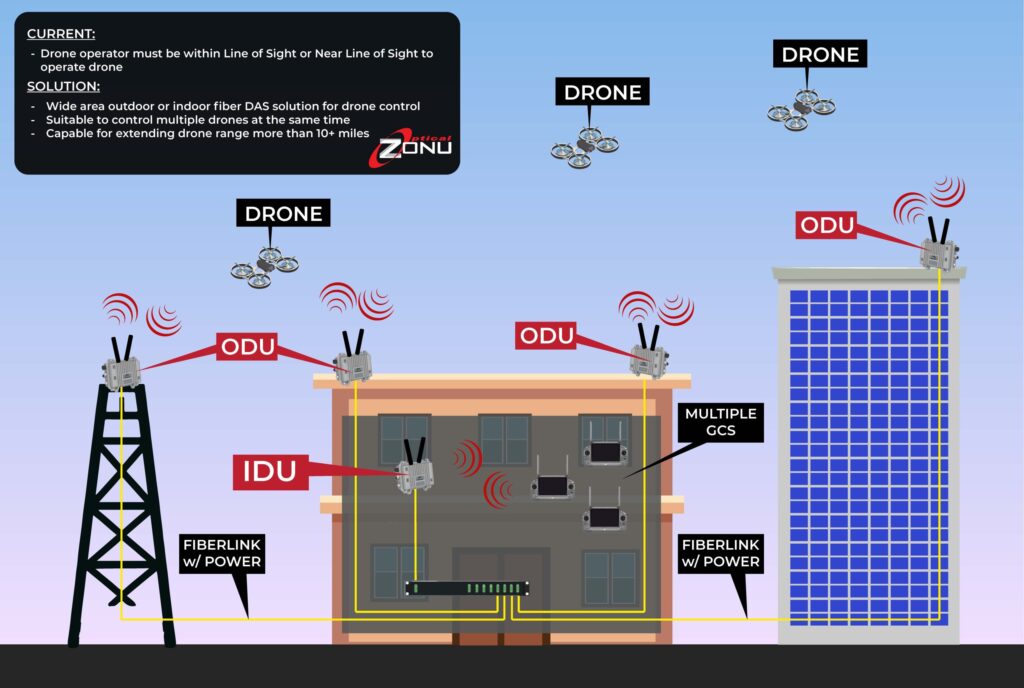
Drones are quickly being recognized as the most transformative technology in modern warfare. What began as simple reconnaissance platforms has evolved into a massive ecosystem that supports surveillance, warfare, electronic sensing, and frontline communication. This shift is already happening in conflicts such as Ukraine, where small, inexpensive drones are now as common as armored vehicles. The pace of adoption is accelerating, and drones are shaping up to define the next era of military and critical infrastructure operations.
Yet, even with better airframes or smart autonomy, the real driver behind drone innovation will be connectivity. The usefulness of any drone in military settings ultimately depends on how well it can communicate images or videos at extended range. The more stable and resilient the link between the operator and the drone, the more ambitious the mission can be. In many ways, drones will only advance as far as their communication technology allows them to go.
The New Connectivity Challenge
Traditional wireless methods such as standard radio frequency (RF) links or public-safety networks often struggle in contested environments. Signals degrade over distance, interference can interrupt control, and adversaries can deliberately disrupt the spectrum. Even outside conflict zones, critical infrastructure environments like mining sites or industrial facilities can make reliable communication surprisingly difficult. When drones cannot maintain a clean, secure, high-bandwidth connection, their effectiveness drops quickly.
These limitations are why the U.S. military has begun exploring alternative hybrid communication pathways that do not rely solely on open-air wireless signals. RF over Fiber (RFoF) is one popular method which uses fiber cables to carry radio signals with far greater protection against interference, jamming, and signal loss. RFoF involves converting RF signal to light for fiber optic communication and then back into RF again at its destination. Because the signal travels through fiber for longer distance rather than exclusively over the air, RFoF provides a more stable and resilient link in situations where traditional RF is vulnerable. Optical communication is also immune to EMI or other electromagnetic interference, providing further protection. These models are not theoretical. They are being deployed in real operations and point toward how drone systems will evolve in the years ahead.
Using Fiber Links to Solve Connectivity Challenges
One example of these drone models is tethered drones, which are physically connected to the controller through a lightweight fiber line that enables a stable and jam-resistant communication path. Because the connection is so consistent, the drone can remain airborne for long periods and serve as an elevated communication point when terrain, distance, or interference would otherwise limit wireless performance. Emergency response teams and military units have already explored this approach because it adds resilience where wireless networks are unreliable.
Another model leveraging direct fiber connectivity is inexpensive one-way drone missions. In these situations, operators rely on a fiber communication path that remains stable from launch to impact using a spool of fiber that unravels as it moves closer to its target. The goal is to ensure that the drone behaves predictably and is not disrupted by interference. Although the drone itself may be expendable, the advantage comes from its ability to reach and destroy valuable targets without losing control along the way. Since the weakest link in this approach is wireless connectivity, that element is removed.
Protecting Operators and Extending Reach in Harsh Environments
A third technique involves protecting the drone operator and extending the distance the drone can travel. In traditional drone missions, the operator is in a surface-level exposed location so the controller can maintain that wireless signal. The hybrid RFoF system is designed to circumvent this issue by connecting fiber from the controller to an optical drone unit (ODU) further away and then reconverting it back to RF. This model is particularly useful in battlefield conditions where safety, distance, or environmental hazards make direct operation impossible.
Consider a soldier located in a protected bomb shelter 20 feet below ground level. A fiber cable can run from the controller to an ODU at ground-level and then reconvert that fiber signal to RF so it maintains connectivity with the drone. Depending on where the ODU is placed, it can dramatically extend the range of the drone and, more importantly, protect the drone operator from enemy retaliation. Another common use case is when drones must investigate a small underground tunnel or other tight spaces. The operator can be above ground with the ODU placed inside the tunnel so that the RF signal can communicate with the drone.
Why These Models Matter for the Future of Drone Warfare
These models share a common purpose. They aim to deliver safer, secure communication links that are resistant to interference and more capable of supporting high-bandwidth data such as live video or sensor feeds. It also allows drones to shed unnecessary onboard electronics, reducing weight and improving endurance. All of this supports longer missions, better situational awareness, and more predictable behavior even when conditions are difficult.
As drones continue to expand in the military sector, the importance of reliable connectivity will only grow. Airframes will get lighter and sensors will get sharper, but the limiting factor will remain the communication pathway that ties the drone to its operator or network. The next generation of drone warfare will be defined by how well they can stay connected in environments that challenge nearly every traditional wireless technology.