
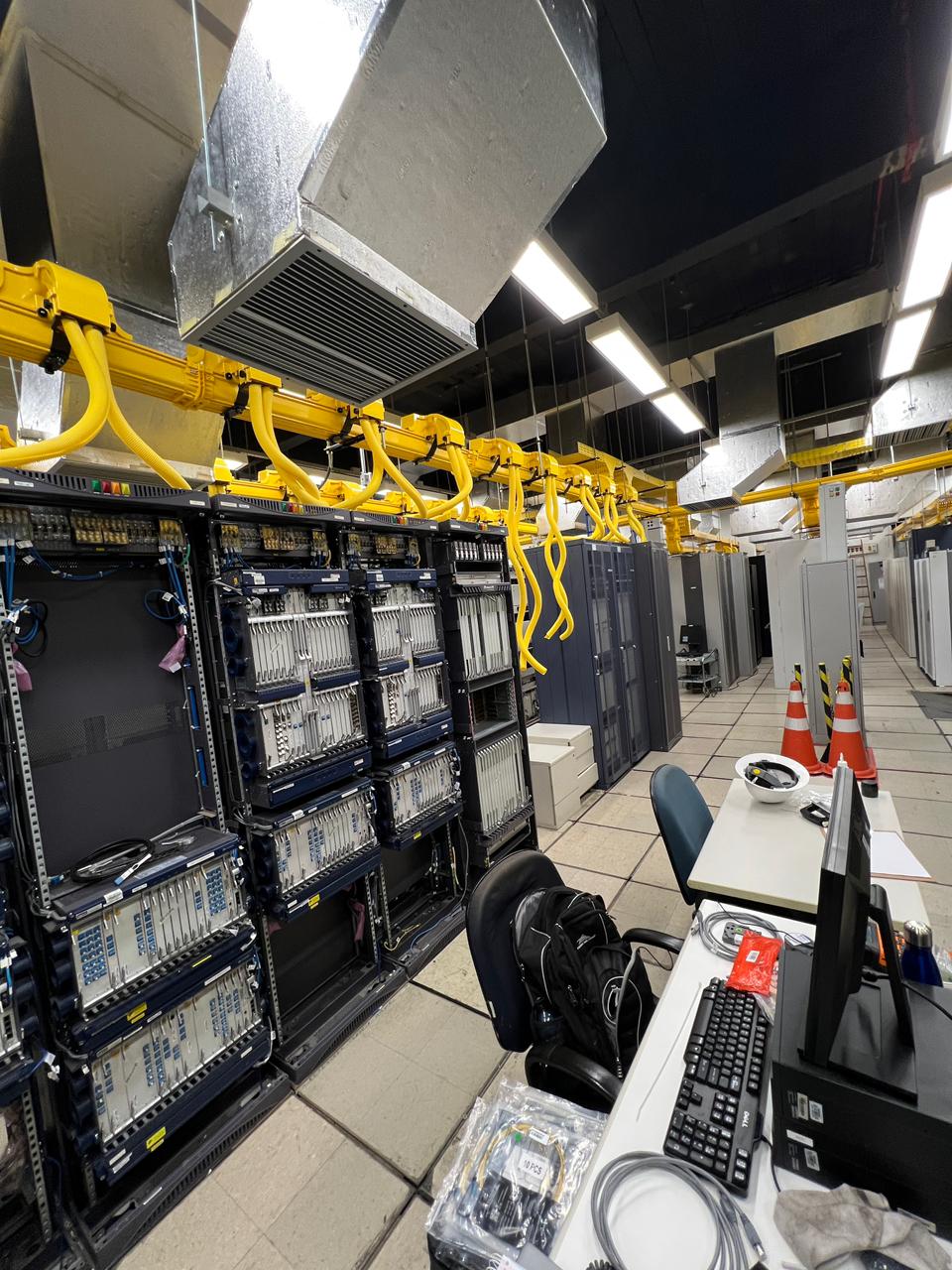
In today’s telecom environment, network operators are under constant pressure to improve reliability, reduce operational costs, and manage aging infrastructure — all without disrupting existing deployments.
Recently, a major Communications Services Provider (CSP) in South America faced exactly this challenge.
After evaluating multiple optical monitoring solutions, they ultimately selected the Micro-OTDR™ SFP/SFP+ transceivers from Optical Zonu as the best path forward for their network.
Here’s why.
Aging Fiber Infrastructure and Limited Visibility
Like many large network operators, this provider is managing a mix of:
- Legacy fiber plant
- Inconsistent cable quality
- Expanding service demands
- Limited physical layer visibility
Traditional troubleshooting methods often require:
- Multiple truck rolls
- Time-consuming fault isolation
- Uncertainty between fiber vs. equipment issues
The result is increased OPEX, longer downtime, and reduced service reliability.
They needed a solution that could quickly and accurately identify fiber faults — without adding complexity to their network.
Requirement #1: Seamless Compatibility with Deployed Equipment
One of the biggest barriers to adopting new monitoring technology is compatibility.
This provider required a solution that would work with their existing:
- Switches
- Routers
- Network interface devices (NIDs)
Micro-OTDR™ SFP/SFP+ transceivers met this requirement by integrating directly into standard pluggable optics — eliminating the need for additional hardware platforms or network redesign.
Requirement #2: No Disruption to Existing Network Operations
Many advanced monitoring solutions require:
- Firmware updates
- Operating system modifications
- Coordination with OEM vendors
This was not a viable path.
Micro-OTDR™ technology allows fault data to be accessed through standard Digital Diagnostic Monitoring (DDM/DoM) interfaces — meaning:
- No firmware upgrade required
- No disruption to live network operations
- Immediate deployability
Requirement #3: Accurate, Real-Time Fiber Fault Location
The provider’s aging fiber infrastructure made rapid fault identification critical.
The Micro-OTDR™ feature provides:
- Instant fault detection
- Precise distance-to-fault calculation
- Visibility into both nearest and farthest reflections
This capability significantly reduces troubleshooting time and removes guesswork from field operations.
Requirement #4: A Practical Alternative to Traditional OTDR Systems
Traditional solutions such as Remote Fiber Test Systems (RFTS) and stand-alone OTDR platforms were considered — but ultimately rejected due to:
- High cost
- Deployment complexity
- Lack of scalability
Micro-OTDR™ offered a fundamentally different approach:
- Embedded directly inside SFP/SFP+ transceivers
- Distributed across the network
- Operating at a fraction of the cost
Requirement #5: A Partner Willing to Collaborate
Technology alone wasn’t enough.
The provider needed a partner willing to:
- Work alongside their team and OEM vendors
- Customize solutions for their specific deployment
- Respond quickly to real-world challenges
Optical Zonu’s engineering and leadership teams provided:
- Direct engagement at the highest levels
- Rapid response to startup and integration challenges
- Flexibility in adapting solutions to meet operational needs
Requirement #6: Long-Term Confidence in the Roadmap
Beyond immediate needs, the provider evaluated the long-term viability of the solution.
Key factors included:
- Ongoing product development
- Deep expertise in optical networking
- A clear roadmap for future enhancements
This gave them confidence that Micro-OTDR™ technology would continue to evolve alongside their network.
The Decision: A Premium Worth Paying
While not the lowest-cost option, the provider determined that Micro-OTDR™ delivered significantly greater value.
The ability to deploy a Fast Fiber Fault Finder directly inside the transceiver — combined with operational savings and improved reliability — made the decision clear.
The Result: Moving Forward with Micro-OTDR™
After careful evaluation, the provider placed a significant order with Optical Zonu and selected Micro-OTDR™ as their preferred solution for optical layer monitoring.
The Bigger Picture
This decision reflects a broader industry shift.
Network operators are moving away from:
- Centralized, high-cost monitoring systems
And toward:
- Distributed, embedded intelligence
- Real-time visibility at the optical layer
- Scalable, cost-efficient solutions
Micro-OTDR™ SFP/SFP+ transceivers represent that shift.
Conclusion
For network operators dealing with aging infrastructure, increasing demand, and pressure to reduce costs, the question is no longer whether to monitor the optical layer — but how.
This case demonstrates that:
- Compatibility matters
- Simplicity matters
- Speed matters
- Partnership matters
And increasingly, an embedded solution with the Micro-OTDR™ is the preferred path forward.