

- Capabilities
- Examples
- Applications
- 10 kHz to 3 GHz, 6 GHz RF, DM LD to 20GHz, ExMOD to 60 GHz
- 1310 nm, 1550 nm, CWDM, DWDM Wavelengths
- High SFDR
- Automatic Optical Power Control, RF AGC, High Dynamic Range, MIMO Gain matching
- Auto-Discovery and real time link gain monitoring
- I2C Serial, RS422, Serial Interface
- NMS, SNMP v2 and v3 Interface (via higher integration levels)
- Indoor or Outdoor Enclosures
- Customization into customer’s enclosure
- OZC responds to any RFoF SOW
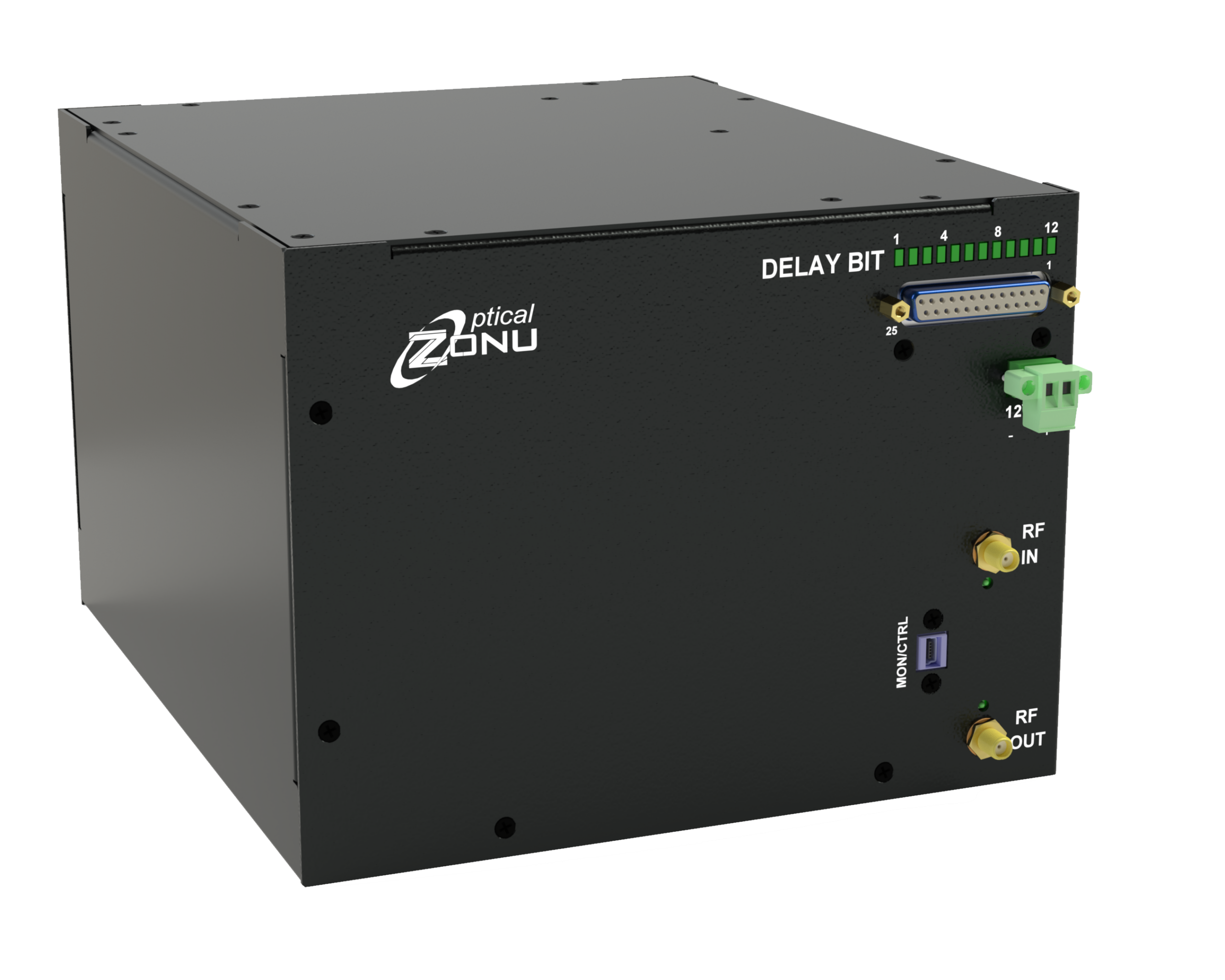
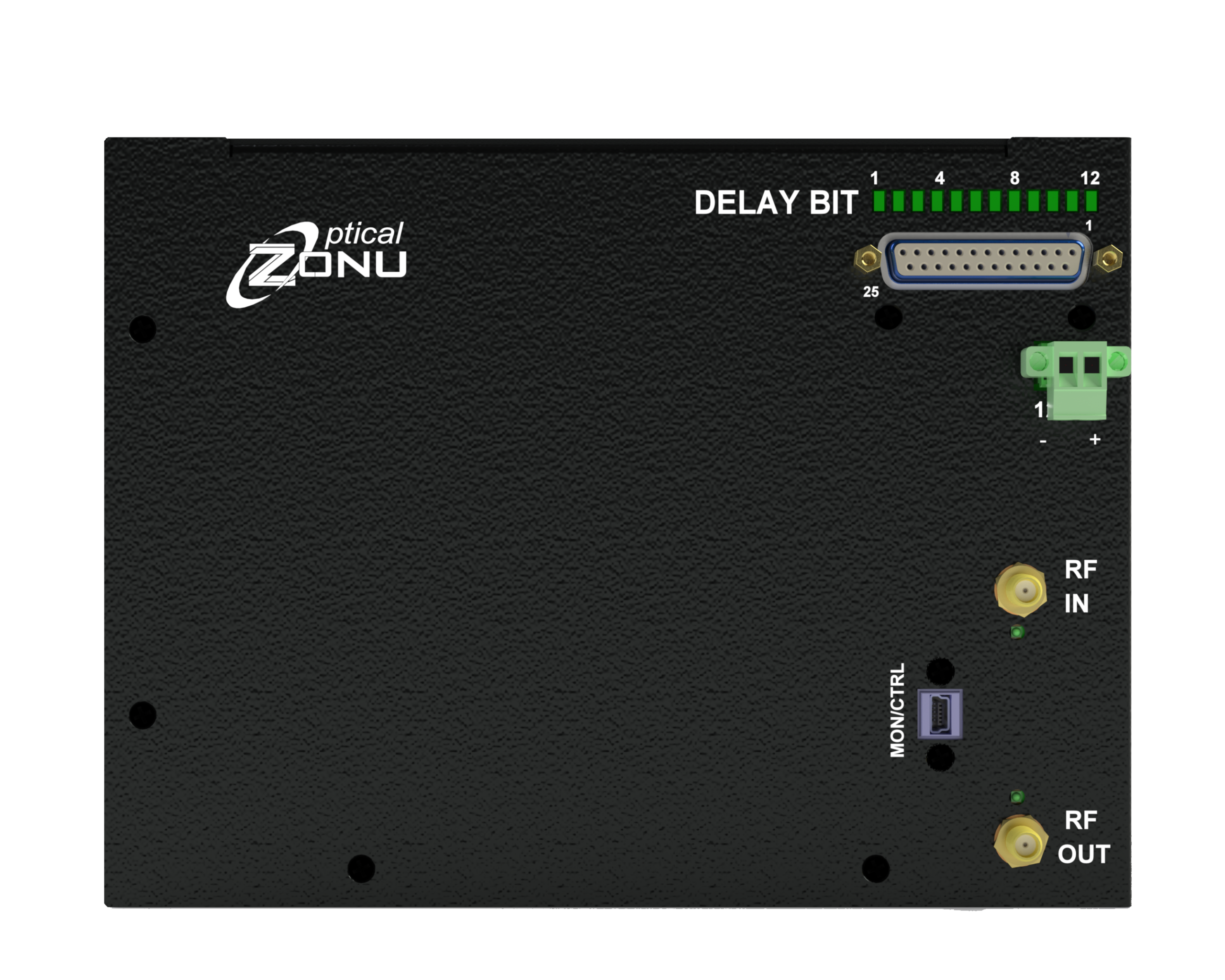
- High T (85degC) maritime Delay line
- 5G fiber repeater (MIMO)
- pSec controlled phase delay
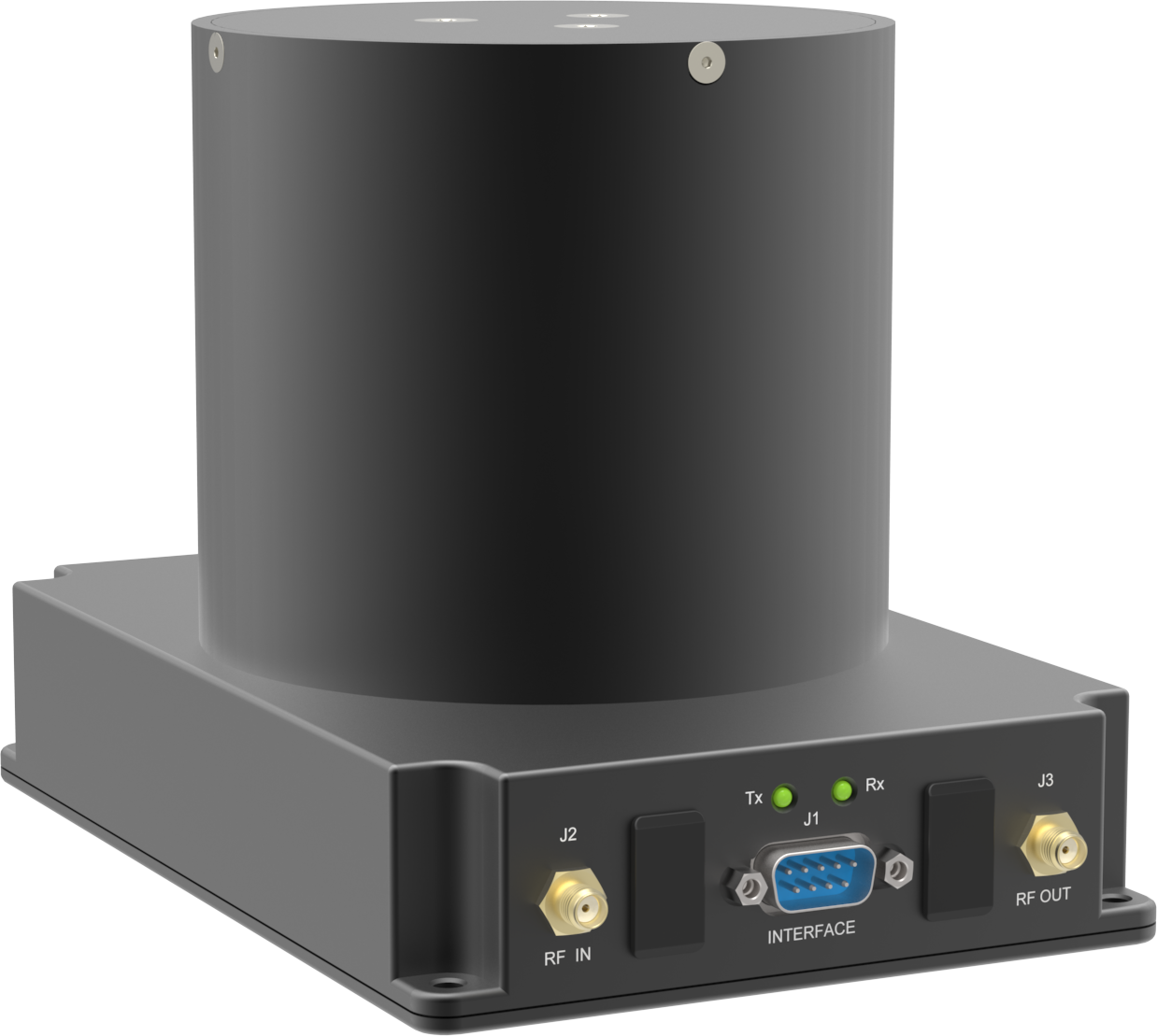
- DWDM Direct Modulation LD custom integration
- RF Over Fiber Transport
- MIMO Repeaters
- Teleport RF Signal Distribution
- Antenna Remoting
- Maritime RF Signal Transport
- Disaster Recovery
- Oil & Gas Platforms
- TVRO
- VSAT
Description
Optical Zonu takes a modular approach to product design and development. Basic building blocks are pigtailed OEM boards. Optical Zonu makes these boards available for integration into larger and/or custom assemblies.
The smallest pigtailed board is the OZ10x fiber transmitter and receiver. These modules weigh just 19 grams, occupy an envelope of 0.7” x 1.6” x 0.3”, and are powered from 5V. The OZ10x is ideal for low size/weight/power applications. The OZ10x was initially developed to transport cell phone antenna pattern measurements from within anechoic chambers. Indeed, they may be powered from a mobile phone. Fiber is preferred within anechoic chambers due to the absence of radiated EM energy from the fiber. These small OEM boards may transport 1 – 6000 MHz and they have an I2C serial interface to accommodate integration into larger systems.
Optical Zonu packages the OZ10x pigtailed boards into J1 sleeves. The J1 presents bulkhead RF and optical connectors and has a blind mate connector for plugging into the 19” 1RU J-Chassis. 20 such J1 pluggable modules may populate the front of a 1RU chassis (more may populate back of chassis). The OZ10x I2C serial interface is made available to the chassis backplane – in this way, the modules may be monitored remotely via SNMP.
The OZ51x is Optical Zonu’s most basic pigtailed board. This board is fixed gain (with or without transmitter LNA), is powered from 12V, has no I2C serial interface. The board does have open collector alarm and analog monitor pins for basic status. The OZ51x is capable of transporting 10 kHz – 6 GHz.
The enhanced OZ52x adds 30 dB tuning range digital attenuators and an I2C control interface. RF power monitors and AGC options may be added as well. The OZ52x is capable of transporting 10 kHz – 6 GHz.
Optical Zonu’s higher level assemblies’ benefit from this modular building block approach. Any combination of OZ51x-type boards are available for integration – 6 GHz RF, 10 – 200 MHz low phase noise, GPS/GNSS, 1PPS, IRIG-B. Any combination of up to eight boards may populate an OZC9500 19” 1RU chassis. Any combination of up to four boards may populate an eFiberSat IP67 outdoor unit. Any combination of up to two boards may populate a J-Chassis plug-in module. For all these higher-level combinations, wavelength multiplexing onto a single fiber and remote monitoring via SNMP are available.
The OZ20x pigtailed OEM board is Optical Zonu’s newest OEM assembly and is similar to the OZ10x in size. The OZ20x adds various serial communication interfaces, inline digital attenuators with 30 dB tuning range, RF power monitors, and manual/AGC. OZ20x may be integrated as individual standalone modules. Optical Zonu integrates up to 4 x OZ20x into a J3U chassis plug-in. The J3U provides and SNMP interface to the OZ20x building blocks. When integrated in this way, up to 64 modules may populate the front of a 3RU chassis.
The above architecture illustrates one of these types of systems. The architecture illustrates the highest level of datacenter redundancy; implementing 4 optical transmitters and 4 optical receivers. Optical splitters are used to provide service to multiple rack locations. Ideally, the outdoor transmitters should be installed on opposite sides of the buildings to provide protection from lightning strikes.
These architectures can be custom tailored to specific applications. Depending on how much redundancy or capacity is required, the same commercial components can be added or removed to a system to meet specific needs. Contact a sales engineer for assistance in designing a system that best meets your needs.