

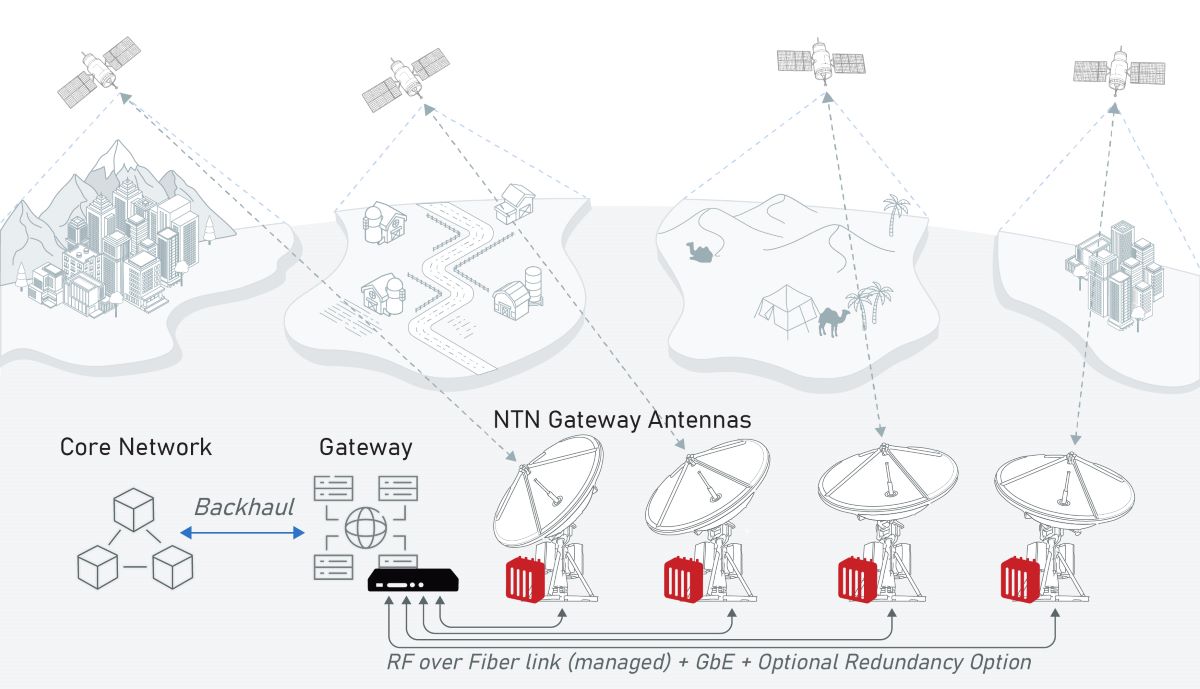
Meir Bartur
CEO, Co-Founder Optical Zonu Corp, IEEE Senior Member
Farzad Ghadooshahy
CTO, Co-Founder Optical Zonu Corp, Van Nuys, CA 91405, USA
Abstract— Radio Frequency over Fiber (RFoF) enables wideband signal transport across wireless, satellite, and phased-array systems. Two main approaches exist: analog RFoF, offering transparent, ultra-low-latency links with multi-octave bandwidth, exceptionally high instantaneous modulation bandwidth and digital RFoF, where high-speed converters digitize RF signals for flexible routing and cloud-native integration. While recent devices such as the AD9084 extend digital capability to tens of giga samples per second, they introduce higher power, data rate, jitter and latency demands. This article compares analog and digital RFoF, highlights trade-offs through case studies in 5G/6G, SATCOM, and timing, and outlines a hybrid roadmap for future networks.
The demand for transporting wideband RF signals over optical fibre continues to accelerate across multiple industries. RF-over-Fiber (RFoF) is a protocol independent, low conversion latency enabling the distribution of high-frequency, high-dynamic-range signals over long distances with low loss, high isolation and immunity to electromagnetic interference. By shifting signal transport into the optical domain operators can simplify system architectures, centralise processing resources and reduce deployment costs in environments where coaxial or waveguide transport is impractical.
In analogue RFoF the RF waveform is directly modulated onto an optical carrier, providing transparent signal transport with minimal conversion latency. In digital RFoF the RF signal is first sampled, quantised and serialised before transmission as a digital data stream. Digital approaches are frequently positioned as ‘future-ready’ due to their natural compatibility with cloud-native processing and networking protocols. However, digitisation introduces significant overheads in terms of power consumption, serialisation of bandwidth and latency. Analogue approaches, by contrast, remain attractive for their simplicity, low size–weight–power (SWaP) and ability to support very wide instantaneous bandwidths.
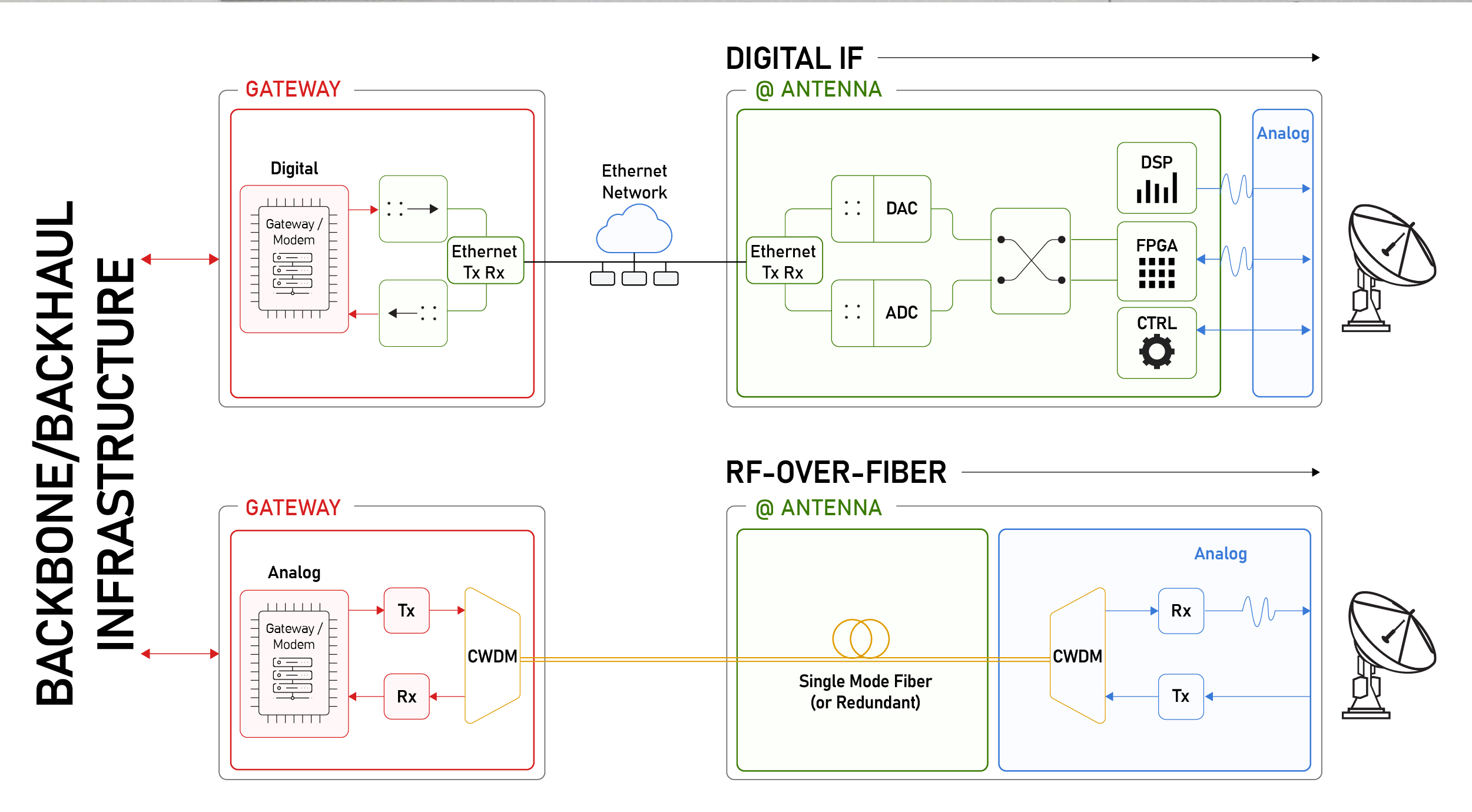
Figure 2: Top level block diagram comparison between RFoF and digital RF transport
Fundamentals
In an analogue RFoF link, the electrical RF waveform is directly modulated onto an optical carrier using either an external modulator or a directly modulated laser. At the receiver, a photodiode converts the optical signal back into its RF form with minimal additional processing. Because the RF waveform is preserved in its continuous-time representation, the link is inherently protocol-agnostic and supports a wide range of formats, from modulated wireless carriers to pulsed radar signals, without requiring knowledge of the underlying standard. The performance of an analogue link is typically characterised by its link gain, noise figure and linearity (spurious-free dynamic range, intermodulation distortion). Latency is extremely low, limited almost entirely to the propagation delay of the optical fibre (≈ 5 µs/km). Analogue RFoF can support multi-octave bandwidths extending beyond 60GHz with appropriate components, making it attractive for wideband applications such as phased-array radar, spectrum monitoring, and future ultra-broadband wireless distribution. The simplicity of the architecture also translates into favourable SWaP characteristics compared to digital alternatives.
Digital RFoF
In a digital RFoF link the incoming RF signal is first sampled and quantised by a high-speed analogue-to-digital converter (ADC). The digital stream is then serialised, packetised and transmitted optically, typically using Ethernet-based standards such as CPRI or eCPRI. At the far end, the process is reversed through deserialisation, buffering, and conversion back into the RF domain via digital-to-analogue converters (DACs) when needed.
Digital RFoF links are attractive because they integrate naturally with digital beamforming, centralised RAN (C- RAN) and cloud-native processing environments. They enable flexible channelisation, compression and routing, which can reduce effective bandwidth for narrowband or sparse signals. However, the fundamental limitations are set by the ADC/DAC front ends: resolution and sampling rate dictate the achievable dynamic range and bandwidth, while serialisation introduces substantial throughput demands (hundreds of Gbps for multi-antenna, wideband systems). Recent studies have explored direct digital RF architectures that extend operation beyond the Nyquist frequency by exploiting higher-order Nyquist zones and under sampling techniques. While these methods demonstrate promising approaches to bandwidth expansion they introduce additional design complexity and remain challenging to implement in practical wideband systems. Latency is also higher, often tens to hundreds of microseconds once conversion, packetisation and reclocking are included.
In practice, digital RFoF architecture requires complex support hardware, including field-programmable gate arrays (FPGAs), serialiser/deserialiser (SERDES) circuits, and protocol stacks. This complexity drives higher cost and power consumption relative to analogue links, but in return provides reconfigurability and seamless compatibility with existing digital transport networks.
Bandwidth and capacity
One of the most significant distinctions between analogue and digital RFoF lies in their bandwidth handling. Analogue links can support multi-octave instantaneous bandwidths, often exceeding 60GHz when designed with high-linearity cooled lasers, wideband modulators and low-noise photodiodes. This capability makes analogue RFoF well suited for transporting wideband radar pulses, multi-carrier satcom signals and ultra-broadband wireless channels. In contrast, digital RFoF is fundamentally constrained by the performance of its data converters. The sampling rate and resolution of ADCs and DACs dictate the maximum transportable bandwidth, while serialisation and packetisation further limit throughput.
Latency
In analogue RFoF the delay is almost entirely determined by the propagation of light through fibre, approximately 5 microseconds per km. With no additional conversions or buffering the signal is essentially available in real time at the remote end. Digital transport, however, introduces multiple latency sources, including ADC/DAC conversion, serialisation, buffering and reclocking. The result is a delay on the order of tens to hundreds of microsecond.
Signal integrity and jitter
Analogue RFoF inherently preserves both amplitude and phase of the transported waveform, which is crucial for coherence-dependent systems. This makes it an ideal choice for applications such as GPS timing distribution, interferometric sensing and phased-array beamforming. Digital links, by contrast, are susceptible to quantisation noise, sampling jitter and reclocking errors, all of which can distort synchronisation across distributed systems. While advanced clock recovery and error-correction schemes can mitigate some of these issues, they add to system complexity and do not eliminate the fundamental limitations imposed by quantisation.
Complexity and power
The architectural differences between analogue and digital RFoF are also reflected in system complexity and power consumption. Analogue links require optical transceivers, bias control circuits and, in some cases, linear optical amplifiers, but otherwise maintain a straightforward design. Digital links, in comparison, demand high-speed ADCs and DACs, SERDES circuits, FPGAs and protocol handling hardware, often supported by complex optical modules. This results in significantly higher requirements in SWaP. For deployments where SWaP is tightly constrained, such as satellite payloads, remote antenna sites, or tactical communications, the added overhead of digital transport can present a major obstacle.
Satcom uplinks/downlinks
Satcom ground stations depend on high-fidelity transport of RF signals between antennas and indoor processing equipment. In both uplink (transmit) and downlink (receive) chains, the preservation of phase, amplitude and frequency content is critical to maintain link budget, modulation integrity and synchronisation with spacecraft.
Analogue RFoF is widely adopted in satcom systems because it transports the entire RF spectrum directly over fibre with minimal latency — limited only to the propagation delay of light in the fibre. This allows antennas to be located hundreds of metres away from control rooms or shelters without introducing significant distortion or delay. For downlinks weak satellite signals received at the parabolic dish can be amplified at the feed and then transparently carried indoors for further demodulation and decoding. For uplinks high-power transmit chains benefit from low-loss fibre transport, avoiding the heavy coaxial cables that otherwise attenuate signals over distance.
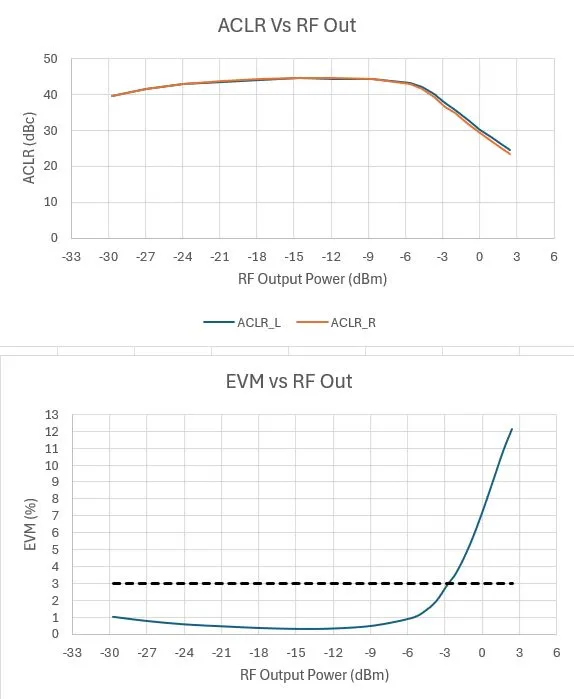
Figure 3: Test example of broad band 5Ghz 5G transport
Digital transport, while powerful for certain baseband applications, adds complexity and delay through digitisation, packetisation and re-timing. These effects can impact synchronisation, carrier tracking and error vector magnitude in modulated satcom signals. In time-sensitive or phase-critical satcom operations — such as ground station diversity combining,telemetry, tracking, and control, and phased uplink arrays — analogue RF-over-fibre provides the lowest-latency and most phase-coherent solution.
5G/6G high data rate MIMO systems
Another domain where analogue RFoF provides significant advantages is in the transport of signals for advanced 5G and emerging 6G wireless systems. These systems rely on massive MIMO (multiple-input, multiple-output) antenna arrays operating at high frequencies to achieve extremely high data rates and low-latency connections.
In such architecture it is often desirable to centralise the digital baseband and keep the remote radio units as lightweight and power efficient as possible. Analogue RFoF enables this by transporting wideband RF signals directly from distributed antenna elements to centralised processing units without digitisation at the edge. This minimises both the cost and power consumption at the antenna site, while avoiding the bottleneck of high-speed ADCs/DACs required for each antenna element.
Because analogue links preserve the entire RF waveform — including amplitude, phase and modulation format — they are particularly well-suited for coherent MIMO techniques, beamforming and carrier aggregation. Latency is minimised to the fibre propagation delay, which supports ultra-dependable low-latency communication requirements in 5G/6G standards.
While digital transport architectures such as CPRI/eCPRI are common in fronthaul networks they require extremely high bandwidth for digitised I/Q data and introduce additional processing delays. In contrast, analogue RFoF provides a leaner and more scalable approach for dense antenna deployments, especially in scenarios where timing and phase coherence across many channels are critical.
Phased antenna arrays
Phased-array systems rely on precise phase and amplitude control across multiple antenna elements to steer beams electronically without mechanical movement. This technique is central to modern radar, satellite communications and emerging 5G/6G infrastructure.
For such arrays, even small amounts of latency variation or jitter between channels can lead to destructive interference, degraded beamforming accuracy, or loss of gain in the intended direction. Analogue RFoF links preserve the relative phase coherence of the RF signals with extremely low and deterministic delay.
By directly transporting RF signals from each antenna element to a centralised processor, analogue links minimise complexity at the antenna site and avoid the need for highspeed ADC/DAC pairs at every element. In large arrays with tens or hundreds of elements, this can drastically reduce system SWaP.
Digital transport methods, while flexible, introduce variable latencies. These effects can break the precise phase relationships required for stable beamforming, especially at higher frequencies where wavelengths are only millimetres long. As a result, analogue RFoF remains the preferred solution for distributed phased-array systems in aerospace, defence and high-frequency communications.
GPS distribution
One of the most critical use cases for analogue RFoF is the distribution of GPS and other GNSS signals. These signals are used not only for positioning, but also as precise time and frequency references.
In such applications the fidelity and latency of the transported signal are paramount. GPS signals are inherently weak at the antenna, often on the order of –130dBm and require amplification and transparent transport to indoor receivers or time servers. Analogue RFoF links preserve the full spectrum and phase information of the GPS signal, enabling downstream systems to extract the timing with sub-nanosecond accuracy. Because no digitisation occurs in the analogue link, latency is reduced to the physical propagation time of light in the fibre (roughly 5µs per km), which is both minimal and deterministic.
By contrast, digital transport introduces additional latency through ADC, buffering, packetisation and digital signal processing. Even with high-speed converters these steps add variable delays and jitters that degrade timing precision. For applications where multiple sites or platforms must remain synchronised to within nanoseconds — such as phased-array radar, satellite ground stations, or financial transaction timestamping — this additional latency and uncertainty are unacceptable.
For these reasons, analogue RF-over-fibre remains the industry standard for GPS antenna distribution and other time-sensitive applications where phase stability and absolute timing accuracy are essential.
Hybrid systems
Many practical systems adopt a hybrid approach that leverages the strengths of both. In these architectures analogue links are used to transport wideband RF signals transparently over long distances, after which the signals are digitised closer to the point of processing. This allows designers to minimise latency and preserve phase coherence where it matters most, while still taking advantage of the flexibility and scalability of digital processing.
Another domain is satellite ground stations, where downlink signals from parabolic dishes are extremely weak and must be transported without distortion. Analogue RFoF links carry the full spectrum indoors, preserving fidelity and minimising delays. Once inside a shielded, resource-rich facility, the signals can be digitised for demodulation, channelisation, or reconfigurable routing across networks. Similarly, uplink chains can use analogue transport to avoid coaxial loss, while digital pre-distortion or adaptive coding is applied downstream.
Hybrid approaches are also valuable in defence and electronic warfare systems, where very wide band spectrum must be monitored in real time. Analogue transport distributes signals across platforms while preserving coherence, after which selected sub-bands are digitised for further analysis, classification, or storage. This strategy avoids overwhelming converter and data throughput limits while ensuring mission-critical signals are not delayed or distorted.
By combining the transparency and low-latency benefits of analogue with the configurability of digital, hybrid architectures represent a balanced pathway for future networks. They enable operators to deploy analogue links where timing and fidelity are paramount, while still tapping into the rich ecosystem of digital processing and cloud integration once the signals are in a favourable environment. As a result, hybrid RFoF systems are increasingly seen not as a compromise, but as the practical roadmap for scalable, future-ready architectures.
When digital RFoF makes sense
Digital RFoF is particularly advantageous in systems dominated by narrowband or channelised signals, where compression and channelisation techniques can significantly reduce the overall transport bandwidth. By digitising the RF signal early, operators can exploit flexible bit-depth, filtering and coding strategies to tailor throughput to the needs of the application rather than carrying the full wideband spectrum.
Digital approaches align naturally with architectures that are already heavily dependent on digital beamforming and cloud-based processing. Centralised radio access networks (C-RAN) and emerging Open RAN frameworks, for example, are structured around digital baseband pooling, making direct digital transport a seamless fit. In such cases, the overhead of digitisation is offset by the benefits of unified processing and the ability to scale computational resources in datacentre environments.
Finally, digital RFoF can be the preferred choice in situations where reconfigurability and routing flexibility outweigh the penalties of latency and power. Packet-based transport enables dynamic reallocation of spectrum, adaptive load balancing across multiple sites and integration with existing Ethernet/IP infrastructure. For network operators seeking maximum flexibility in resource management and topology design, these features can be decisive.
When analogue RFoF makes sense
A key advantage of analogue RFoF is its superior spurious free dynamic range (SFDR) compared to digital transport systems, particularly wideband signals. This higher SFDR, often exceeding 110dB/Hz, results from the linear signal transfer of analogue RFoF, which avoids the quantisation noise and spurious tones inherent in digital conversion. As a result, analogue RFoF maintains signal purity and preserves both weak and strong signals across a wide dynamic range.
Analogue RFoF remains the preferred option in scenarios where latency and signal transparency are paramount. By eliminating the need for sampling, quantisation and packetisation, analogue links provide the lowest possible delay, limited only by fibre propagation. This makes them suited to mission-critical operations such as phased-array synchronisation, timing distribution and real-time control systems, where microsecond-level responsiveness is essential.
Another strength of analogue transport is its predictable and transparent signal fidelity. Because the RF waveform is carried in its native form, both amplitude and phase are preserved across the link, ensuring coherent performance in applications ranging from GPS timing to multi-antenna radar. The high SFDR of analogue RFoF further enhances this fidelity by minimising intermodulation distortion and maintaining the integrity of complex modulated signals even under large variations in input power.
Analogue RFoF also offers advantages in terms of simplicity and efficiency. The architecture requires only optical transceivers, biasing and occasionally optical amplification, avoiding the substantial power and complexity overhead of high-speed converters and digital processing. This translates into lower SWaP, a critical factor for satellite payloads, airborne platforms and remote installations where resources are constrained.
Finally, analogue links benefit from decades of proven deployment across multiple sectors. Defence and aerospace programmes rely on them for radar and EW distribution; commercial satellite ground stations use them for uplink and downlink remoting; and telecom infrastructure integrates them for RF distribution in dense urban networks. This maturity ensures high reliability, a broad component ecosystem and well-established design practices.
Outlook
The evolution of RFoF is unlikely to be defined by a single dominant architecture. Instead, hybrid approaches are expected to emerge, where analogue transport is used to extend RF signals across long distances with minimal distortion, followed by digitisation at later stages for integration into digital processing workflows. This model combines the best attributes of both domains: the low-latency, wide-band transparency of analogue with the flexibility and reconfigurability of digital. Meanwhile, continuing advances in optical component technologies are steadily pushing the performance of analogue RFoF. Low-noise distributed feedback lasers, highly linear Mach–Zehnder modulators and broadband optical amplifiers are enabling ever-higher dynamic ranges and wider instantaneous bandwidths. These improvements not only reinforce the viability of analogue transport but also open opportunities for new applications such as Terahertz communications, spectrum monitoring and next-generation satellite payloads.
In parallel, the expansion of digital architectures in 5G/6G and cloud-native datacentre environments will continue to create strong demand for direct digital transport. However, analogue RFoF is poised to remain the baseline solution in domains where transparency, timing and coherence cannot be compromised.
Taken together, these trends suggest that the future of RFoF will not be a binary choice between analogue and digital. Rather, it will be a convergent roadmap in which each architecture is applied where it delivers the most value and hybrid solutions become increasingly common. For industry stakeholders, understanding these trade-offs will be essential to designing scalable, future-ready systems that can meet the diverse demands of wireless, satellite, defence and scientific applications.
While digital RFoF is gaining attention in the literature and industry discussions, its trade-offs in latency, bandwidth and complexity make it less suitable for many aerospace and defence applications. Analogue RFoF continues to deliver unmatched transparency, coherence and reliability. For mission-critical systems, analogue remains not just relevant, but essential.
Meir Bartur is the president and CEO of the Optical Zonu Corporation. Farzad Ghadooshahy is CTO and co- founder of Optical Zonu.
to see online article Click Here